

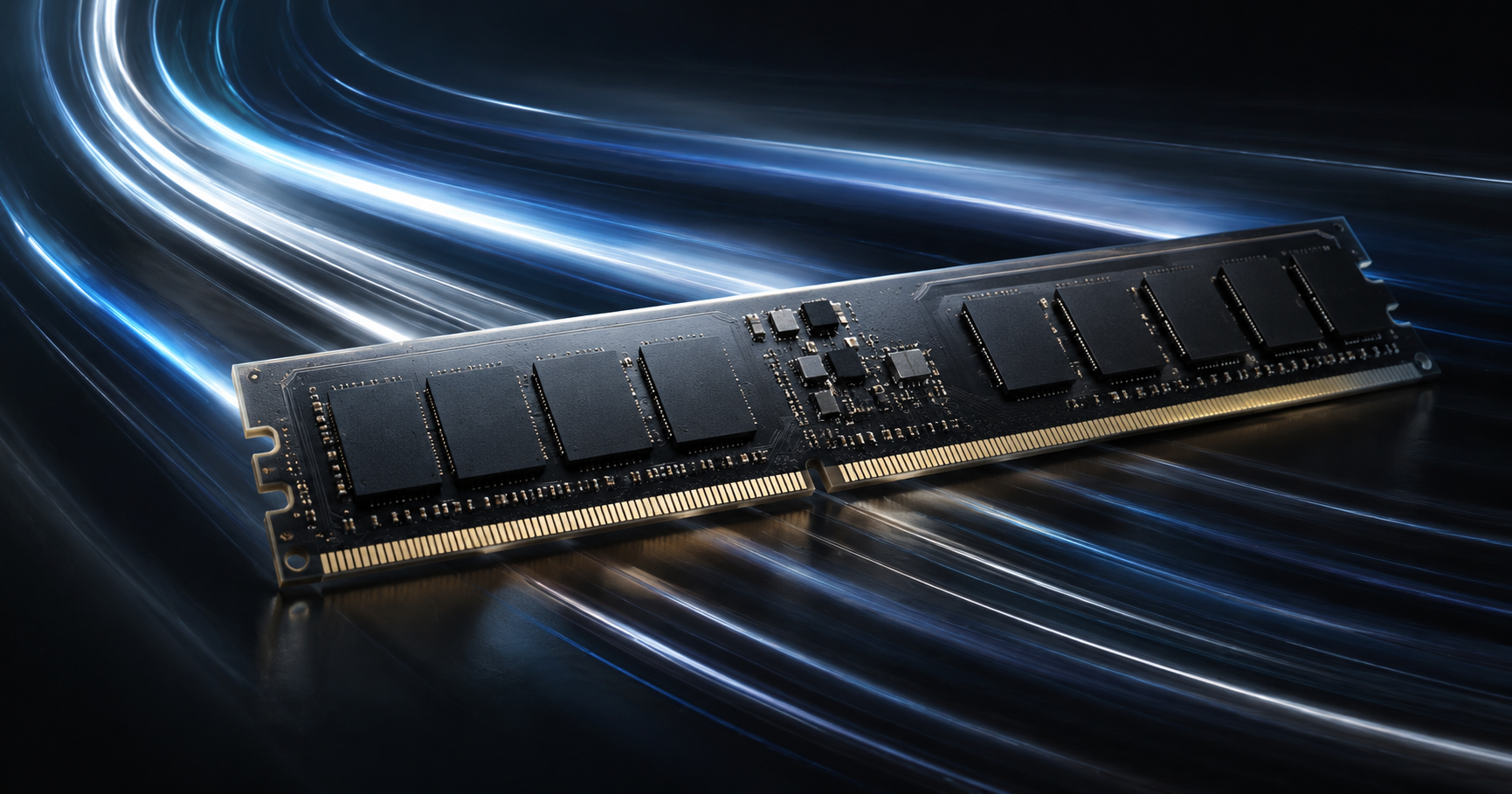
DDR6 memory is expected to become the next major step in DRAM technology after DDR5. As servers, workstations, cloud platforms, artificial intelligence workloads, and enterprise systems handle larger amounts of data, memory bandwidth will continue to play an important role in overall system performance. Industry outlooks often point to DDR6 starting around 8,800 MT/s and scaling higher over time, but final performance will depend on completed standards and platform support.
For businesses, DDR6 should be viewed as a future memory transition, not an immediate replacement for DDR5. Final specifications, processor support, motherboard compatibility, validation requirements, and product availability will determine when DDR6 becomes practical for different systems.
In the meantime, most organizations should continue planning around currently available DDR5, DDR4, and legacy memory modules based on platform compatibility, lifecycle needs, and sourcing availability.
What Is DDR6 Memory?
DDR6, short for Double Data Rate 6, is the expected successor to DDR5 memory. Like previous DDR generations, DDR6 is being developed to support higher data rates, increased bandwidth, improved efficiency, and stronger performance for next-generation computing platforms.
Each new DDR generation is designed to help systems move more data between memory and processors. DDR4 is commonly associated with data rates up to 3,200 MT/s, while DDR5 moved into higher-speed ranges for current platforms. DDR6 is expected to continue that progression with projected speeds beginning around 8,800 MT/s and moving higher as the standard matures.
Because DDR6 is still a developing memory generation, businesses should treat current DDR6 speed and feature details as a planning outlook rather than a final purchasing specification.
DDR6 vs DDR5: What Could Change?
DDR5 already improved on DDR4 with higher bandwidth, better efficiency, and newer memory architecture features. DDR6 is expected to continue that direction by supporting faster data movement and future platform performance requirements.
The biggest difference for businesses is not just speed. Even if DDR6 reaches projected data rates such as 8,800 MT/s and higher, it will still require new processors, chipsets, motherboards, and platform validation. That means DDR6 should be planned as part of a larger system transition, not as a simple drop-in replacement for DDR5.
| Memory Generation | Status | Speed Outlook | Business Use |
|---|---|---|---|
| DDR4 | Widely used in current and legacy systems | Commonly up to 3,200 MT/s | Industrial, embedded, legacy, and cost-sensitive platforms |
| DDR5 | Current high-performance memory generation | Commonly 4,800–6,400 MT/s, with newer standards extending higher | Servers, workstations, desktops, and enterprise systems |
| DDR6 | Future / developing memory generation | Projected around 8,800 MT/s and higher as the standard develops | Future high-bandwidth systems, data centers, and advanced computing platforms |
The visual below summarizes the practical memory planning path: use validated memory for current systems, monitor DDR6 for future platforms, and plan sourcing around compatibility instead of hype.

Why DDR6 Matters for Future Systems
Modern computing environments are handling larger datasets and more demanding workloads. Artificial intelligence, virtualization, cloud infrastructure, analytics, edge computing, and high-performance applications all place pressure on memory bandwidth and system throughput.
DDR6 is expected to help future platforms move more data faster and support higher-performance computing environments. Projected speed ranges around 8,800 MT/s and beyond could matter for data centers, advanced workstations, cloud platforms, and enterprise systems where memory bottlenecks can affect overall performance.
- Higher projected memory bandwidth for data-intensive systems
- Improved support for future processors and platform architectures
- Potential efficiency improvements for high-performance environments
- A future upgrade path beyond DDR5 memory systems
- Long-term planning considerations for IT, engineering, and procurement teams
Should Businesses Wait for DDR6?
In most cases, businesses should not delay current upgrades just to wait for DDR6. Memory decisions should be based on the systems being used today, the platforms being deployed, and the availability of validated memory modules.
For current server upgrades, workstation refreshes, industrial systems, embedded platforms, and lifecycle support projects, DDR5, DDR4, or legacy memory may still be the correct choice. Even though DDR6 is expected to bring higher speed potential, the right memory today depends on platform compatibility, workload requirements, environmental needs, capacity, form factor, and sourcing availability.
DDR6 is worth tracking for future planning, but it should not replace practical procurement decisions for current systems.
What Businesses Should Use Today
Most businesses should continue planning around currently available and widely supported memory technologies, including DDR5 and DDR4 memory modules, along with legacy memory where required.
| Business Need | Recommended Focus Today |
|---|---|
| Current server upgrades | DDR5 or DDR4 depending on platform compatibility |
| Legacy system support | DDR4, DDR3, DDR2, DDR1, or specialized legacy modules |
| Industrial and embedded systems | Commercial or industrial temperature memory options |
| Future high-performance systems | Monitor DDR6 speed, standards development, and platform availability |
| Procurement planning | Work with a memory supplier for availability, lifecycle, and part number support |
How AMP Supports Memory Sourcing Today
Accelerated Memory Production, Inc. supplies memory and storage products for commercial, industrial, embedded, enterprise, and legacy applications. While DDR6 is still part of the future memory roadmap, AMP supports customers today with DDR5, DDR4, and legacy memory sourcing.
AMP can assist with part number matching, replacement options, product availability, lead time checks, and sourcing support for customers who need memory solutions across multiple generations, speeds, and form factors.
- DDR5 memory modules
- DDR4 memory modules
- DDR3, DDR2, DDR1, and legacy modules
- RDIMM, SODIMM, ECC, non-ECC, and specialty memory options
- Industrial temperature memory solutions
- Hard-to-find and lifecycle memory support
Preparing for the Next Memory Transition
DDR6 represents the next step in the evolution of memory technology, with higher speed and bandwidth potential than DDR5. But memory transitions take time. Businesses should continue using the memory technologies supported by their current platforms while staying informed about future standards, compatibility requirements, and availability timelines.
Need help sourcing DDR5, DDR4, or legacy memory modules today? Contact AMP for memory availability and part number support.
FAQs About DDR6 Memory
DDR6 is still a future memory generation and is not broadly available for standard business systems today. Most current platforms continue to use DDR5, DDR4, or legacy memory depending on system compatibility.
DDR6 speed details should be treated as projected until standards and platforms are finalized. Current industry outlooks commonly reference DDR6 starting around 8,800 MT/s and scaling higher over time, but real-world support will depend on processors, motherboards, and validated memory modules.
Most businesses should not delay current upgrades just to wait for DDR6. Memory decisions should be based on current platform support, lifecycle needs, availability, and validated DDR5, DDR4, or legacy memory options.
No. Like previous DDR generations, DDR6 is expected to require compatible processors, chipsets, and motherboard platforms. DDR6 should not be treated as a drop-in replacement for DDR5.
Businesses should use the memory supported by their current systems, such as DDR5, DDR4, DDR3, DDR2, DDR1, RDIMM, SODIMM, ECC, non-ECC, or industrial temperature memory modules where required.


